
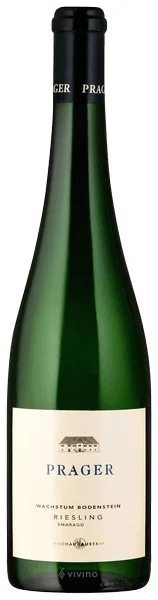
Description
Franz Prager, co-founder of the Vinea Wachau, had already earned a reputation for his wines when Toni Bodenstein married into the family. The marriage of Franz’s daughter, Ilse, to Dr. Toni Bodenstein in the 1990s was the catalyst for a sweeping renaissance at the winery. Bodenstein, a biologist, geologist, and historian, spent years studying the geology of the region and focused much of his attention on preserving genetic diversity. His “Arche Noah” project, a planting of old Grüner Veltliner and Riesling clones, resulted from his research. Bodenstein’s scholarly approach, passion for biodiversity, and brilliant winemaking has elevated Prager to the highest echelon of Austrian wine producers.
Location of Vineyard
The Prager estate is made up of 17.5 hectares planted to 60% Riesling and 40% to Grüner Veltliner. Located on steep terraces, the vineyards are partly in Wei?enkirchen (Hinter der Burg, Hinter Seiber, Steinriegl, Zwerithaler, Klaus, and Achleiten), partly in Dürnstein (Kaiserberg, Hollerin, and Liebenberg), and are planted at extremely high densities of up to 15,000 plants per hectare. Bodenstein makes four different wines from the famed Achleiten vineyard including Wachstum Bodenstein Grüner Veltliner (from 110 clones), and Stockkultur Grüner Veltliner produced from a patch of very old post-trained vines at the top of Achleiten. Wachstum Bodenstein Riesling (from 25 clones) comes from the upper terraces of Hinter Seiber.
Winemaking Philosophy
Prager belongs to the prestigious Vinea Wachau and vinifies under the strict parameters of their codex. Harvest is typically from October to November. Grapes are hand-harvested, sorted to eliminate botrytis, and sent directly to press where they’re fermented by what Bodenstein describes as “controlled spontaneous fermentation.” Toni Bodenstein prevents malolactic fermentation from occurring. Since 1996, Prager wines have been vinified entirely in stainless-steel tanks. This minimalist approach reveals wines of precision and elegance, moderate levels of alcohol, and clear expression of origin. “Vom Stein zum Wein” (from rocks to wine) is Toni Bodenstein’s motto and his ideology is reflected by his non-interventionist methods in the cellar.
Franz Prager, co-founder of the Vinea Wachau, had already earned a reputation for his wines when Toni Bodenstein married into the family. Bodenstein’s passion for biodiversity and old terraces, coupled with brilliant winemaking, places Prager in the highest echelon of Austrian producers.
Smaragd is a designation of ripeness for dry wines used exclusively by members of the Vinea Wachau. The wines must have minimum alcohol of 12.5%. The grapes are hand-harvested, typically in October and November, and are sent directly to press where they spontaneously ferment in stainless-steel tanks.
Wachstum, meaning “Growth” or “Cru,” is a nursery for Toni Bodenstein who planted 25 different nursery clones of Riesling 460 meters in elevation at the top of Hinter Seiber. When planted in 1990, the goal of Wachstum Bodenstein was to preserve biodiversity. First produced in 1993, it is now one of Prager’s most sought-after wines.
Tasting Notes
Austrian Riesling is often defined by elevated levels of dry extract thanks to a lengthy ripening period and freshness due to dramatic temperature swings between day and night. Wachstum Bodenstein’s high elevation, bordering the forest at the top of the mountain, produces one of Prager’s most mineral and finessed Rieslings.
Food Pairing
Riesling’s high acidity makes it one of the most versatile wines at the table. Riesling can be used to cut the fattiness of foods such as pork or sausages and can tame some saltiness. Conversely, it can highlight foods such as fish or vegetables in the same way a squeeze of lemon or a vinaigrette might.
Reviews
There are no reviews yet.