
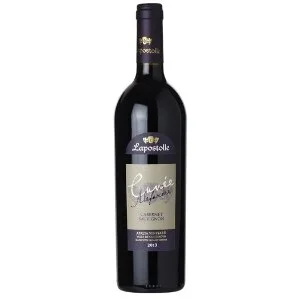
Description
Sourced from our own vineyards, Cuvee Alexandre wines express our dedication to quality and the expression of the Terroir of Lapostolle.GENERAL CLIMATE CONDITIONS OF COLCHAGUA VALLEY Apalta is located 170 Kilometers South West of Santiago in the Colchagua Valley. The Vineyard is situated on a North to South exposure, which is quite rare in Chile. The Tinguiririca river rests on one side and the hills from the Coastal Cordillera surround the vineyard like a horseshoe on the other and are both integral in forming this unique terroir. This geography is responsible for the conditions that ensure balance for our vines and a slow ripening for the grapes.At sunrise and sunset, the hills block the suns rays, limiting the vines exposure to intense sunshine and the river has a cooling influence on the climate.Apalta has special meso-climate that is different from the rest of Colchagua Valley. Its climate could be described as Semi-dry Mediterranean; with a winter only rainy season and a long dry summer season. Rains are highly concentrated during the winter reaching over 450 mm in on average. During the growing season Oct-April, we have beautiful days and warm temperatures with no rain. There are cool breezes in the afternoons and the night-time temperatures are cold. We benefit from a wide temperature fluctuation between night and day; which is a key quality factor for color and tannins in our red wines. Slow maturation allows the grapes to reach their ideal maturity with high concentration and character, preserving the fruit and high levels of natural acidity, ensuring a long ageing potential.The Soil The soil in our parcel of old Cabernet Sauvignon is of colluvial origin, with a high proportion of granite and quartz. It has a deep, but very poor top-soil, with very good drainage and a low capacity of water retention. The old vines show an excellent balance and a very deep root system.Vintage Conditions In 2013 This 2013 vintage brought great conditions for growing our Cabernet Sauvignon. In general, winter in 2012 was dry and cold in Apalta, except in june which showed higher temperatures and was also humid +2C versus the last 10 years average. The springtime rains where average. All rains where concentrated in october. Summer was colder and more humid than the historic data. During December, rains of 68.1 mm at Apalta made it the wettest December known in Lapostolles history. These rains supplied our water reserves and allowed the grapevines to develop without the necessity of extra summer irrigation. Only February brought back normal recorded temperatures. The ripening process occurred slowly but, it was very balanced. Fall and march brought normal conditions. Regarding the temperatures, April was going well only the maxima were lower. The grape lost early its vegetal flavors and was technically ready to make wine, but we had to wait for the aromatic and phenolic ripeness. The ripening was going slowly, because of the fall characteristics lower temperatures, shorter days, more clouds. So it was very important to be on top of the evaluations, waiting for the maturity and then harvesting quickly considering the risk of rain.Winemaking As a general winemaking philosophy, in our Cuvee Alexandre Cabernet Sauvignon we look for elegance, balance and ageing potential. To express the terroir of Apalta is our mission; so our winemaking philosophy remains very natural process with minimal intervention. Our key points are 100% hand harvest in small cases of 14 kilos, strict fruit selection by 82% optical state of the art grape selection, Vistalys and 12% hand de-stemming of the grapes at our Clos Apalta Winery, gentle extraction methods and a judicious use of oak to preserve the fruit but integrate the complexity that a wine of this quality deserves. Our Cuvee Alexandre Cabernet Sauvignon comes from an old block of Cabernet planted in 1920 with high density in special soil and geographic conditions. We add 14% of Carmenere and 1% of Cabernet Franc in this vintage to enhance the aromatic expression of this typical variety from Bordeaux.All fermentations were made with wild yeast in barrels, where the wine stays for 14 months, ageing patiently. There is no stabilization, no clarification and a very light filtration prior to bottling.Tasting Notes ColorDeep red with dark purple hints.NoseFresh red fruit aromas such as plums and cherries and delicate notes of sweet spices. Very elegant.MouthConcentrated body with balance and length. Good tannic structure and round mid palate. Very persistent.Service and Food PairingCellar for several years or decant for 1 hour and serve at 16C 60F. Ideal companion for meats such as lamb and slow cooking dishes.Vineyard Management Organic Certified vineyard by CERES Organic and Biodynamic vineyard management by DEMETER. High density plantation 5.400 to 6.666 pl/ hectare. Non grafted vines, masal selection. Yields Average 4.500 Kg/heor 1,8 Tons/acre. Leaf removal and green harvest to fine tune yields. Vertical trellis system with double guyot pruning. Hand harvested in small cases of 14 kilos. Harvested from the 3th of April to 20th of May, 2013.Winemaking Grapes Selection 82% Cluster selection by hand and optical berries selection by Vistalys. 18% Hand de-stemming at Clos Apalta Winery.Fermentation 100% Wild yeast. Fermentation in stainless steel tanks and wooden vats. Skin contact up to 4 – 5 weeks.Ageing 100% of the blend in 225L French oak for 12 monthsBarrel Use 26% in new, 21% in second use and 53% third use oak. Coopers Saury, Sylvain, Radoux, Seguin Moreau, Demptos and Taransaud. Most medium toast.Fining And Filtering Not fined or cold stabilized. Light plate sheet filtration only before bottling – Casa LapostolleThe Cabernet Sauvignon from Colchagua has a true identity Intense red fruit and a structure to age many years. Here in Apalta, the fact that the vines are eighty years old and planted in high density gives the wine an extra layer of complexity. – Jacques Begarie, Chief Winemaker
Reviews
There are no reviews yet.